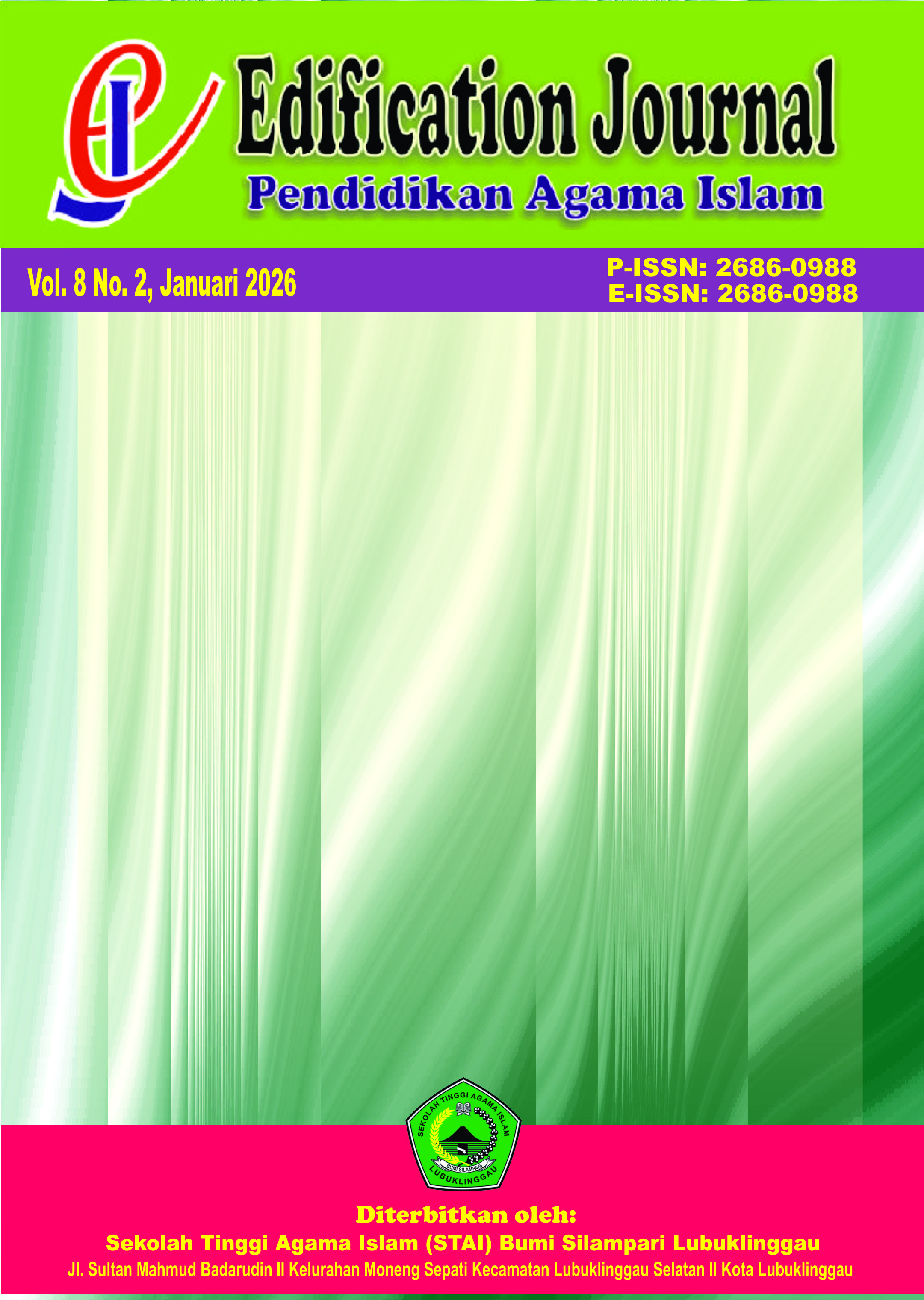
Islamic Religious Education Teachers As Professionals: An Analysis Of Their Roles And Functions In Education
DOI:
https://doi.org/10.37092/ej.v8i2.1471Keywords:
Teacher Professionalism; Roles and Functions; Islamic EducationAbstract
The professionalism of Islamic Religious Education (IRE) teachers is a crucial factor in achieving national education goals and forming students' noble character (akhlaqul karimah). However, a gap persists between professional standards and the practical challenges teachers face in the digital era. This study aims to analyze the roles and functions of IRE teachers as professionals in the modern educational context. Using a qualitative approach with a literature review method, data were gathered from relevant laws, books, and academic journals. The results indicate that an IRE teacher's professionalism is built upon four mandatory competencies: pedagogical, professional, personality, and social. Beyond being mere instructors, IRE teachers function as "murabbi" (nurturers) who instill moral values, facilitators of active learning, and motivators who inspire spiritual and intellectual growth. The study concludes that the integration of digital competence and the role of "uswatun hasanah" (exemplary role model) are essential for IRE teachers to effectively manage contemporary educational dynamics.
Downloads
Downloads
Published
How to Cite
Issue
Section
License
Copyright (c) 2026 Ahmad Ferdiansyah, Fitriyani, Jerry Fernandi, Muslin Dwi Novandra, Siti Aisyah, Utiyah Afiani

This work is licensed under a Creative Commons Attribution-NonCommercial-NoDerivatives 4.0 International License.